bot
-
Jumlah Konten
129.611 -
Bergabung
-
Kunjungan terakhir
Never
Everything posted by bot
-
 Blues March Album: Moanin' (1958) Written by: Benny Golson Personnel: Art Blakey — drums Lee Morgan — trumpet Benny Golson — tenor saxophone Bobby Timmons — piano Jymie Merritt — bass
 -
Along Came Betty Album: Moanin' (1958) Written by: Benny Golson Personnel: Art Blakey — drums Lee Morgan — trumpet Benny Golson — tenor saxophone Bobby Timmons — piano Jymie Merritt — bass
-
Moanin' Album: Moanin' (1958) Written by: Bobby Timmons Personnel: Art Blakey — drums Lee Morgan — trumpet Benny Golson — tenor saxophone Bobby Timmons — piano Jymie Merritt — bass
-
Lonely Woman Album: Song for my Father (1964) Written by: Horace Silver Personnel: Horace Silver — piano Blue Mitchell — trumpet Junior Cook — tenor saxophone Eugene Taylor — bass Roy Brooks — drums
-
Que Pasa? Album: Song for my Father (1964) Written by: Horace Silver Personnel: Horace Silver — piano Carmell Jones — trumpet Joe Henderson — tenor saxophone Teddy Smith — bass Roger Humphries — drums
-
Song for my Father Album: Song for my Father (1964) Written by: Horace Silver Personnel: Horace Silver — piano Carmell Jones — trumpet Joe Henderson — tenor saxophone Teddy Smith — bass Roger Humphries — drums
-
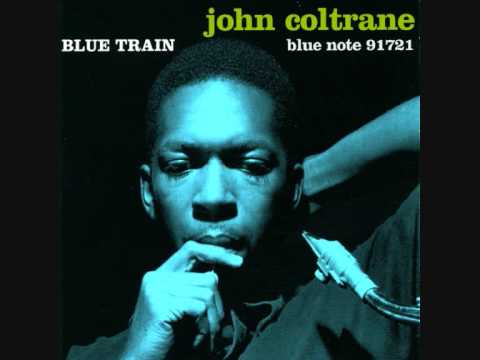
Lazy Bird Album: Blue Train (1957) Written by: John Coltrane Personnel: John Coltrane tenor saxophone Paul Chambers — double bass Kenny Drew — piano Curtis Fuller — trombone Philly Joe Jones — drums Lee Morgan — trumpet
-
Blue Train Album: Blue Train (1957) Written by: John Coltrane Personnel: John Coltrane tenor saxophone Paul Chambers — double bass Kenny Drew — piano Curtis Fuller — trombone Philly Joe Jones — drums Lee Morgan — trumpet
-
One for Daddy-O Album: Somethin' Else (1958) Written by: Nat Adderley Sam Jones Personnel: Cannonball Adderley — alto saxophone Miles Davis — trumpet Hank Jones — piano Sam Jones — bass Art Blakey — drums
-
Autumn Leaves Album: Somethin' Else (1958) Written by: Joseph Kosma Johnny Mercer Jacques Prévert Personnel: Cannonball Adderley — alto saxophone Miles Davis — trumpet Hank Jones — piano Sam Jones — bass Art Blakey — drums
-
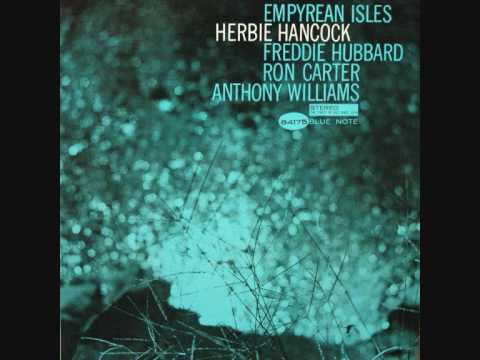
Cantaloupe Island Album: Empyrean Isles (1964) Written by: Herbie Hancock Personnel: Herbie Hancock — piano Freddie Hubbard — cornet Ron Carter — bass Tony Williams — drums
-
Maiden Voyage Album: Maiden Voyage (1965) Written by: Herbie Hancock Personnel: Herbie Hancock — piano Freddie Hubbard — trumpet George Coleman — tenor saxophone Ron Carter — bass Tony Williams — drums
-
Excellent progressive jazz by Dizzy Gillespie with Charlie Parker, Sidney 'Big Sid' Catlett, Al Haig, and Curly Russell. Recorded in 1945 and here released on a GUILD label 78 rpm record. Enjoy!
-
Arguably Glenn Miller's theme song, "In the Mood", the biggest hit of 1940, which stayed on the Billboard charts for 30 weeks, peaking at #1.
-
A Love Supreme (1964) 1. Acknowledgement 2. Resolution 3. Pursuance 4. Psalm John Coltrane, tenor saxophone McCoy Tyner, piano Jimmy Garrison, bass Elvin Jones, drums Easily one of the most important records ever made, John Coltrane's A Love Supreme was his pinnacle studio outing that at once compiled all of his innovations from his past, spoke of his current deep spirituality, and also gave a glimpse into the next two and a half years (sadly, those would be his last). Recorded at the end of 1964, Trane's classic quartet of Elvin Jones, McCoy Tyner, and Jimmy Garrison stepped into the studio and created one of the most thought-provoking, concise, and technically pleasing albums of their bountiful relationship (not to mention his best-selling to date). From the undulatory (and classic) bassline at the intro to the last breathy notes, Trane is at the peak of his logical yet emotionally varied soloing while the rest of the group is remarkably in tune with Coltrane's spiritual vibe. Composed of four parts, each has a thematic progression leading to an understanding of spirituality through meditation. From the beginning, "Acknowledgement" is the awakening of sorts that trails off to the famous chanting of the theme at the end, which yields to the second act, "Resolution," an amazingly beautiful piece about the fury of dedication to a new path of understanding. "Persuance" is a search for that understanding, and "Psalm" is the enlightenment. Although he is at times aggressive and atonal, this isn't Trane at his most adventurous (pretty much everything recorded from here on out progressively becomes much more free, and live recordings from this period are extremely spirited), but it certainly is his best attempt at the realization of concept — as the spiritual journey is made amazingly clear. A Love Supreme clocks in at just over 30 minutes, but if it had been any longer it could have turned into a laborious listen. As it stands, just enough is conveyed. It is almost impossible to imagine a world without A Love Supreme having been made, and it is equally impossible to imagine any jazz collection without it. [allmusic.com]
-
A Love Supreme (1964) 1. Acknowledgement 2. Resolution 3. Pursuance 4. Psalm John Coltrane, tenor saxophone McCoy Tyner, piano Jimmy Garrison, bass Elvin Jones, drums Easily one of the most important records ever made, John Coltrane's A Love Supreme was his pinnacle studio outing that at once compiled all of his innovations from his past, spoke of his current deep spirituality, and also gave a glimpse into the next two and a half years (sadly, those would be his last). Recorded at the end of 1964, Trane's classic quartet of Elvin Jones, McCoy Tyner, and Jimmy Garrison stepped into the studio and created one of the most thought-provoking, concise, and technically pleasing albums of their bountiful relationship (not to mention his best-selling to date). From the undulatory (and classic) bassline at the intro to the last breathy notes, Trane is at the peak of his logical yet emotionally varied soloing while the rest of the group is remarkably in tune with Coltrane's spiritual vibe. Composed of four parts, each has a thematic progression leading to an understanding of spirituality through meditation. From the beginning, "Acknowledgement" is the awakening of sorts that trails off to the famous chanting of the theme at the end, which yields to the second act, "Resolution," an amazingly beautiful piece about the fury of dedication to a new path of understanding. "Persuance" is a search for that understanding, and "Psalm" is the enlightenment. Although he is at times aggressive and atonal, this isn't Trane at his most adventurous (pretty much everything recorded from here on out progressively becomes much more free, and live recordings from this period are extremely spirited), but it certainly is his best attempt at the realization of concept — as the spiritual journey is made amazingly clear. A Love Supreme clocks in at just over 30 minutes, but if it had been any longer it could have turned into a laborious listen. As it stands, just enough is conveyed. It is almost impossible to imagine a world without A Love Supreme having been made, and it is equally impossible to imagine any jazz collection without it. [allmusic.com]
-
-
John Coltrane — Tenor Saxophone McCoy Tyner — Piano Steve Davis — Bass Elvin Jones — Drums From : Coltrane's Sound released in 1964 on Atlantic Records, catalogue SD 1419. It was recorded at Atlantic Studios during the sessions for My Favorite Things.
-
Charlie Parker with Miles Davis on SAVOY label 78 rpm record recorded in 1947 performing DONNA LEE! Enjoy!
-
(F.E. Churchill-L.Morey) Bourne Co. Album- Someday my prince will come Miles Davis-Trumpet John Coltrane-tenor sax Wynton Kelly-piano Paul Chambers-bass Jimmy Cobb, Philly Joe Jones-drums Recorded March 7, 20, and 21 1961 at Columbia 30th Street studio, New York
-
Classic. Comment/Rate/Enjoy!
-
Rockeando!
-
"Cast Your Fate to the Wind" written by Vince Guaraldi was a hit single in 1963 and won the Grammy Award for Best Original Jazz Composition that year. It was included in the album, Jazz Impressions Of Black Orpheus, released on April 18, 1962 by the Vince Guaraldi Trio on Fantasy Records now available on CD on the Ojc label. This sound recording is administered by UMG. I do not own the right to the song, audio, or images contained in this video.No copyright infringement is intended. This purpose of this upload is for viewer enjoyment and education not for monetary gain.
-
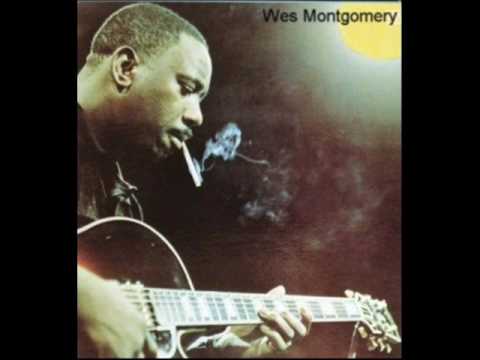
Personnel: Wes Montgomery (guitar); Wynton Kelly (piano); Paul Chambers (bass); Jimmy Cobb (drums). Recorded live at the Half Note, New York, New York and Van Gelder Studios, Englewood Cliffs, New Jersey in June and September 1965. Personnel: Wes Montgomery (guitar); Wynton Kelly (piano); Paul Chambers (bass instrument); Jimmy Cobb (drums). Recording information: Englewood Cliffs, New Jersey; 1965. This album is the live equivalent of the INCREDIBLE GUITAR album--Wes Montgomery cooking with a seasoned and communicative piano trio on a set of jazz compositions, standards, and original material. INCREDIBLE GUITAR has Tommy Flanagan, Percy Heath, and Albert Heath; SMOKIN' has the Wynton Kelly trio, with Paul Chambers on bass, and Jimmy Cobb on drums. Not only had the same trio served as one of Miles Davis' great rhythm sections, but Kelly was considered by many to be the most gifted accompanist of his time. Miles Davis's "No Blues" is in fact an utterly relentless blues, with Montgomery nailing each single-note, octave, or block-chord phrase with passionate conviction. Bassist Sam Jones's "Unit 7" is another uptempo blues. "Four on Six," which debuted on INCREDIBLE GUITAR, gets an edited version of the head and a slightly faster treatment overall. Kelly takes the lead on the first ballad, "If You Could See Me Now," Montgomery on the second, framing the melody to "What's New" in octaves over Cobb's late-night brushes. The excellent sound quality and almost complete lack of audience noise throughout makes SMOKIN' feel like eavesdropping of the best kind.
-
Them that's got shall get Them that's not shall lose So the Bible said and it still is news Mama may have, Papa may have But God bless the child that's got his own That's got his own Yes, the strong gets more While the weak ones fade Empty pockets don't ever make the grade Mama may have, Papa may have But God bless the child that's got his own That's got his own Money, you've got lots of friends Crowding round the door When you're gone, spending ends They don't come no more Rich relations give Crust of bread and such You can help yourself But don't take too much Mama may have, Papa may have But God bless the child that's got his own That's got his own Mama may have, Papa may have But God bless the child that's got his own That's got his own He just worry 'bout nothin' Cause he's got his own